Mongolia
Gobi Desert
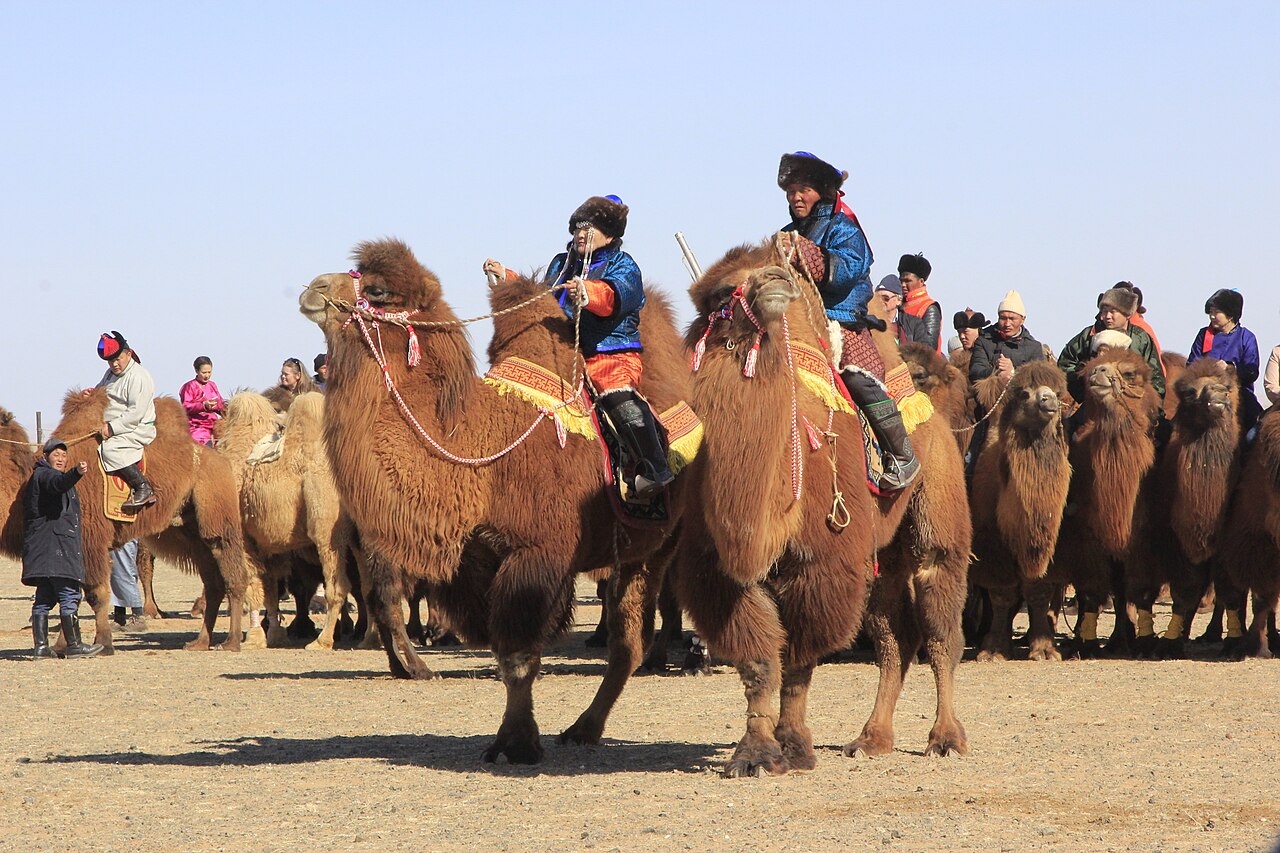
Welcome to the Gobi Desert! Stretching across Mongolia and China, this vast desert isn't sandy and hot like you might expect — much of it is rocky, cold, and even snowy in winter.
Why is it special?
It's one of the largest deserts in the world, covering an area bigger than the country of France.
Unlike most deserts, the Gobi gets bitterly cold, with snowy winters and temperatures that can swing wildly in a single day.
How was it formed?
Tall mountain ranges nearby block rain clouds from reaching the Gobi, leaving the land extremely dry — scientists call this a 'rain shadow.'
Over millions of years, wind and ice wore down rock into the mix of gravel plains, dunes, and cliffs seen there today.
Amazing facts
The first dinosaur eggs ever scientifically confirmed were discovered in the Gobi Desert in 1923.
Wild Bactrian camels, with two humps, are perfectly built to survive the Gobi's freezing winters and scorching summers.
Quick facts
- The first dinosaur eggs ever scientifically confirmed were discovered in the Gobi Desert in 1923.
- Wild Bactrian camels, with two humps, are perfectly built to survive the Gobi's freezing winters and scorching summers.
- Temperatures can swing by 30 to 40 degrees Celsius between day and night in some parts of the desert.
- Despite being called a desert, less than 5% of the Gobi is covered in sand dunes — most of it is bare rock and gravel.