China
Li River & Guilin Karst Mountains
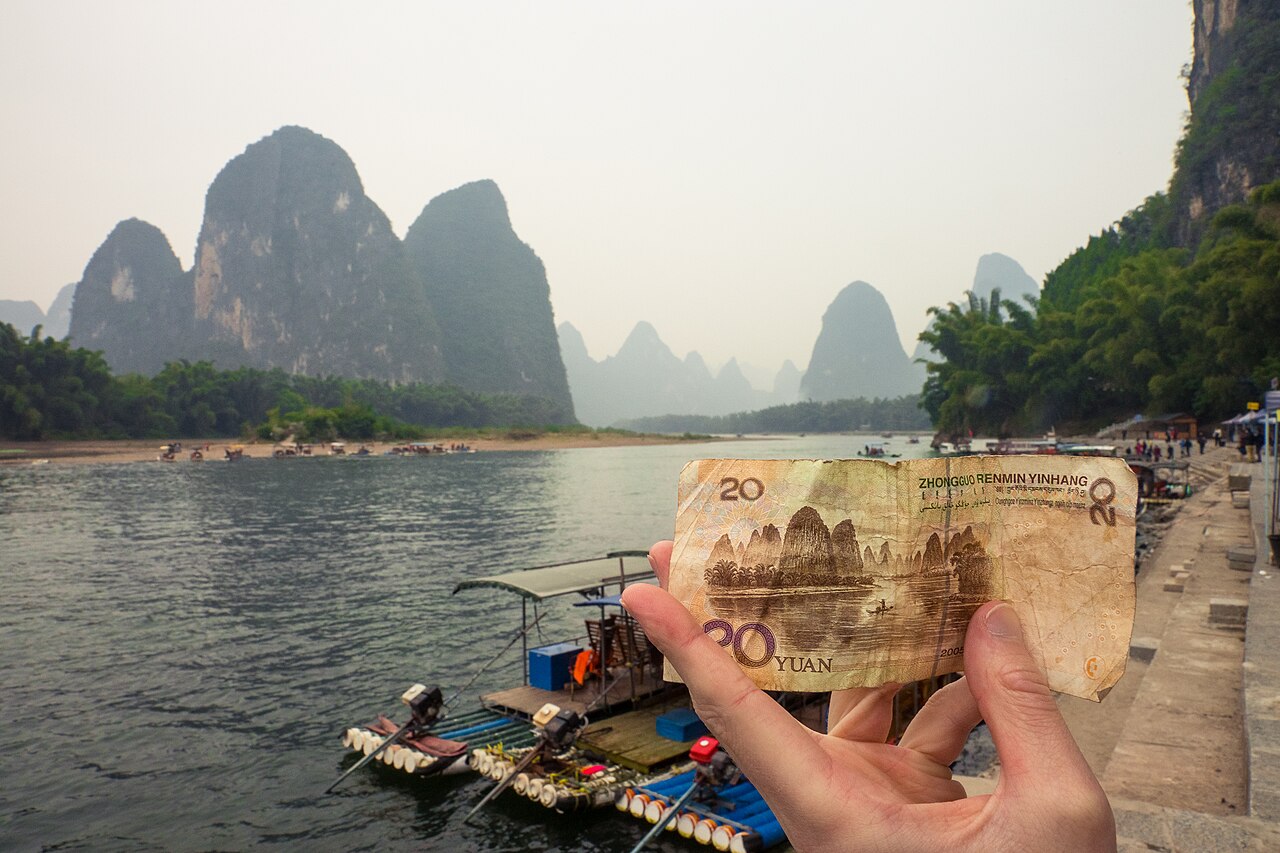
Welcome to China! The Li River flows quietly between thousands of tall, pointed limestone peaks near Guilin — scenery so famous it's printed right on Chinese money.
Why is it famous?
The Li River winds for about 51 miles through a forest of steep, cone-shaped limestone peaks called karst mountains.
This exact view — misty peaks reflected in the river with a bamboo raft floating by — appears on the back of China's 20 yuan banknote.
How was it formed?
The peaks are made of limestone that was once an ancient seabed, pushed upward over millions of years.
Rain slowly dissolved the soft limestone, carving out thousands of separate tower-shaped hills instead of one solid mountain range.
Amazing facts
Guilin's name means 'Forest of Sweet Osmanthus,' after the fragrant trees that bloom there every autumn.
There are thousands of individual karst peaks in the region, some rising over 300 feet straight up from flat farmland.
Quick facts
- Guilin's name means 'Forest of Sweet Osmanthus,' after the fragrant trees that bloom there every autumn.
- There are thousands of individual karst peaks in the region, some rising over 300 feet straight up from flat farmland.
- Traditional bamboo rafts still carry visitors down the river, past fishing villages that look almost unchanged for centuries.
- Fishermen here once used trained cormorant birds, which dive underwater and catch fish for their owners.