France
The Louvre
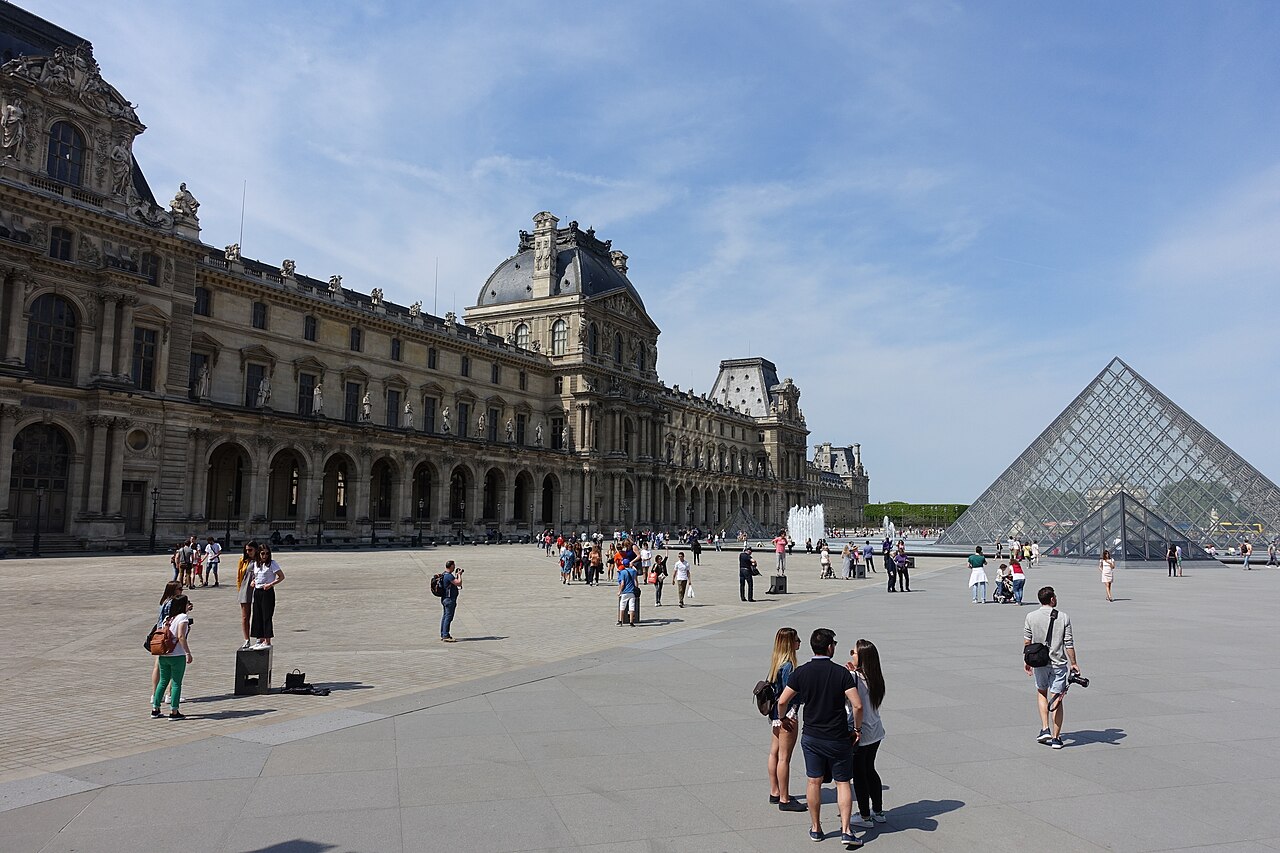
Welcome to the Louvre in Paris, France! This enormous former palace is now the biggest art museum on Earth, and its main entrance is a dazzling glass pyramid that rises right out of the courtyard.
Why is it famous?
The Louvre is the largest art museum in the world, with so much to see that it would take weeks to look at everything inside.
Its glass-and-metal entrance pyramid, built in the palace's main courtyard, has become just as famous as the historic palace surrounding it.
How was it built?
The Louvre building started out in the 12th century as a fortress, then was rebuilt over centuries into a grand royal palace before becoming a public museum in 1793.
The glass pyramid entrance was designed by architect I. M. Pei and completed in 1989, built from 603 diamond-shaped and 70 triangular glass panels.
Amazing facts
The Louvre's pyramid stands 71 feet (21.6 meters) tall, with a base as wide as a football field's end zone.
A popular myth claims the pyramid has exactly 666 glass panes — but that's not true, it actually has 673.
Quick facts
- The Louvre's pyramid stands 71 feet (21.6 meters) tall, with a base as wide as a football field's end zone.
- A popular myth claims the pyramid has exactly 666 glass panes — but that's not true, it actually has 673.
- The museum building itself used to be a royal palace where French kings and queens once lived.
- Millions of visitors from all over the world walk through the pyramid's doors every single year.