United Kingdom
White Cliffs of Dover
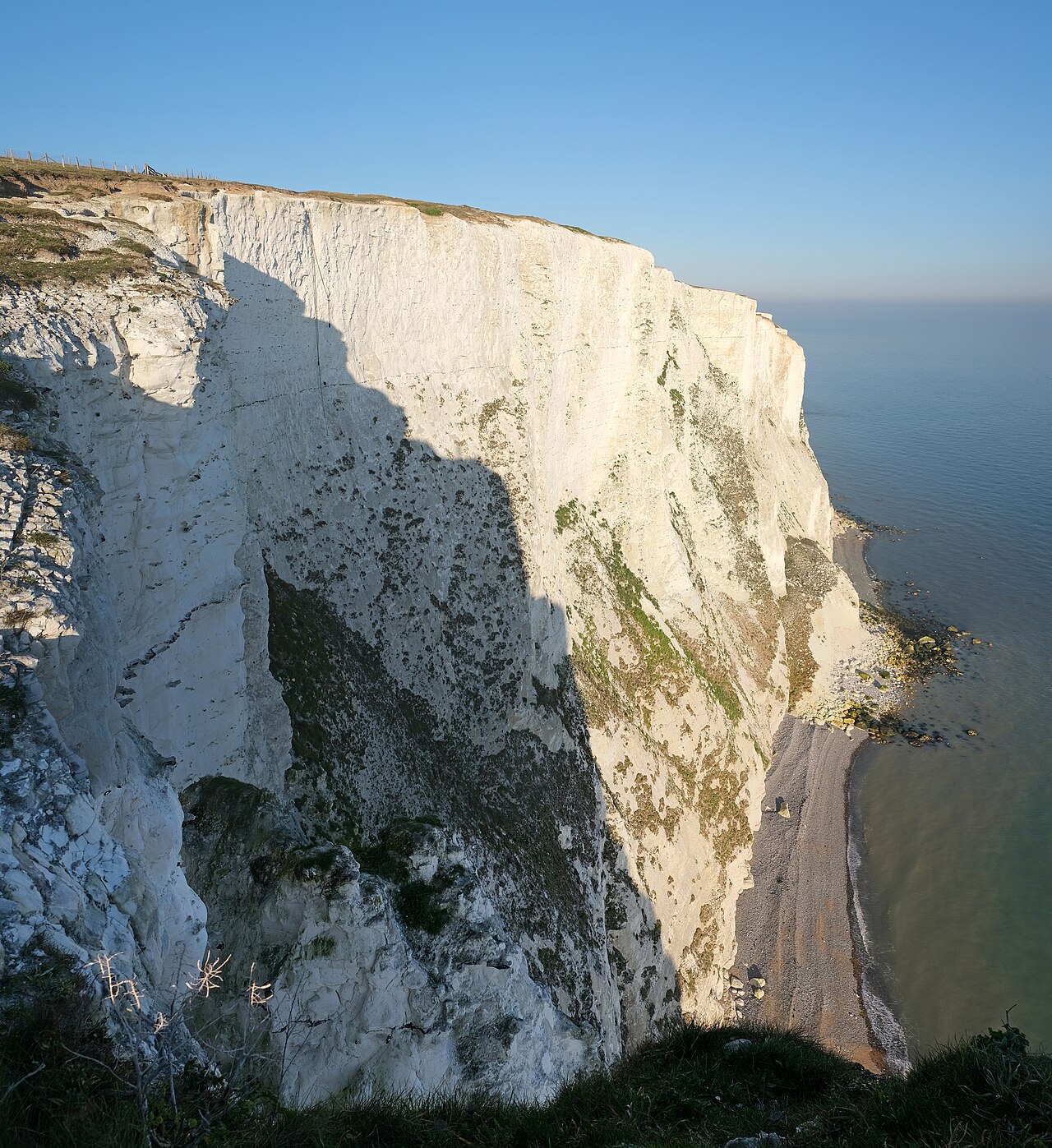
Welcome to England! The White Cliffs of Dover are tall, brilliant-white cliffs rising straight up from the sea, marking the closest point between England and mainland Europe.
Why is it famous?
For centuries, these bright white cliffs have been the very first glimpse of England for ships sailing across the sea.
They stretch for about 10 miles along the coast and rise as high as 350 feet.
How was it formed?
The cliffs are made of chalk, a soft white rock formed from the tiny shells of sea creatures that lived here 70 million years ago, when this area was under the ocean.
Waves keep crashing against the base of the cliffs, slowly wearing them away even today.
Amazing facts
The chalk is made almost entirely of tiny fossilized algae shells called coccoliths, too small to see without a microscope.
On a clear day, you can see the coast of France from the cliff tops, only about 21 miles away.
Quick facts
- The chalk is made almost entirely of tiny fossilized algae shells called coccoliths, too small to see without a microscope.
- On a clear day, you can see the coast of France from the cliff tops, only about 21 miles away.
- The cliffs are home to rare wildflowers and butterflies found almost nowhere else in Britain.
- Peregrine falcons, the fastest animals on Earth, nest on the cliff ledges.